Failure guide
Z Seam Blob Fix
A z-seam blob is a start/stop mark first, not a random surface defect. Put the seam in one visible place, print a small seam tower, and only then decide between pressure advance, wipe/coast, retraction restart, temperature, or seam placement.
Independent third-party notes. Verify firmware, heater, electrical, and vendor-specific work against official documentation for your exact printer.
Prove it is the seam first
Start with the one test that separates seam blobs from random zits.
- Change only this
- Change only seam placement first. Do not tune temperature, flow, pressure advance, and retraction together.
- Stop when
- Stop seam tuning if blobs stay random; move to heat, moisture, nozzle buildup, or flow instead.
Start here
The printer is overfilling or oozing at perimeter start/stop points.
A z-seam blob is a start/stop mark first, not a random surface defect. Put the seam in one visible place, print a small seam tower, and only then decide between pressure advance, wipe/coast, retraction restart, temperature, or seam placement.
- Check first
- Force the seam to one rear corner, print the seam tower, and see whether every blob lines up vertically.
- Change only this
- Seam position first. If the blob follows it, tune pressure advance/linear advance or wipe/restart next.
- Verify with
- The seam tower printed twice with the same material, nozzle, speed, and seam location.
- Time
- 5 min setup
- Risk
- Low
- Needs purchase
- No.
Pick what you see
Pick the Z Seam Blob Fix branch
Choose the visible evidence or log clue that matches first. The card below keeps the next move to one test and one variable.
Blobs line up vertically or move when seam placement changes.
- Likely cause
- Seam placement, restart, pressure advance, or wipe/coast.
- First test
- Force seam to one corner and print the seam tower.
- Change only this
- Change only seam placement first.
- Parameter range
- Aligned/rear/nearest as one controlled change
- Stop when
- The blob follows or leaves the seam.
- Verify with
- Seam tower with visible corner.
Pick the exact path
Most failed fixes go wrong when they start from the wrong branch.
Use this when the failure appears on FDM slicers or the closest matching setup.
- First test
- Force seam to one corner and print the seam tower.
- Change only this
- Change only seam placement first.
- Stop when
- The repeat test clearly improves or points to a different branch.
Use this if the symptom started after a nozzle, spool, plate, slicer, firmware, or maintenance change.
- First test
- Restore the last known-good context or isolate only the recent change with one small repeat test.
- Change only this
- Undo or isolate the recent change; do not retune the whole profile.
- Stop when
- The repeat test clearly improves or points to a different branch.
Use this when the first proof test looks the same after one safe variable change.
- First test
- Repeat the same test once to rule out a bad slice or one-off print.
- Change only this
- Switch branch instead of stacking another setting.
- Stop when
- The repeat test clearly improves or points to a different branch.
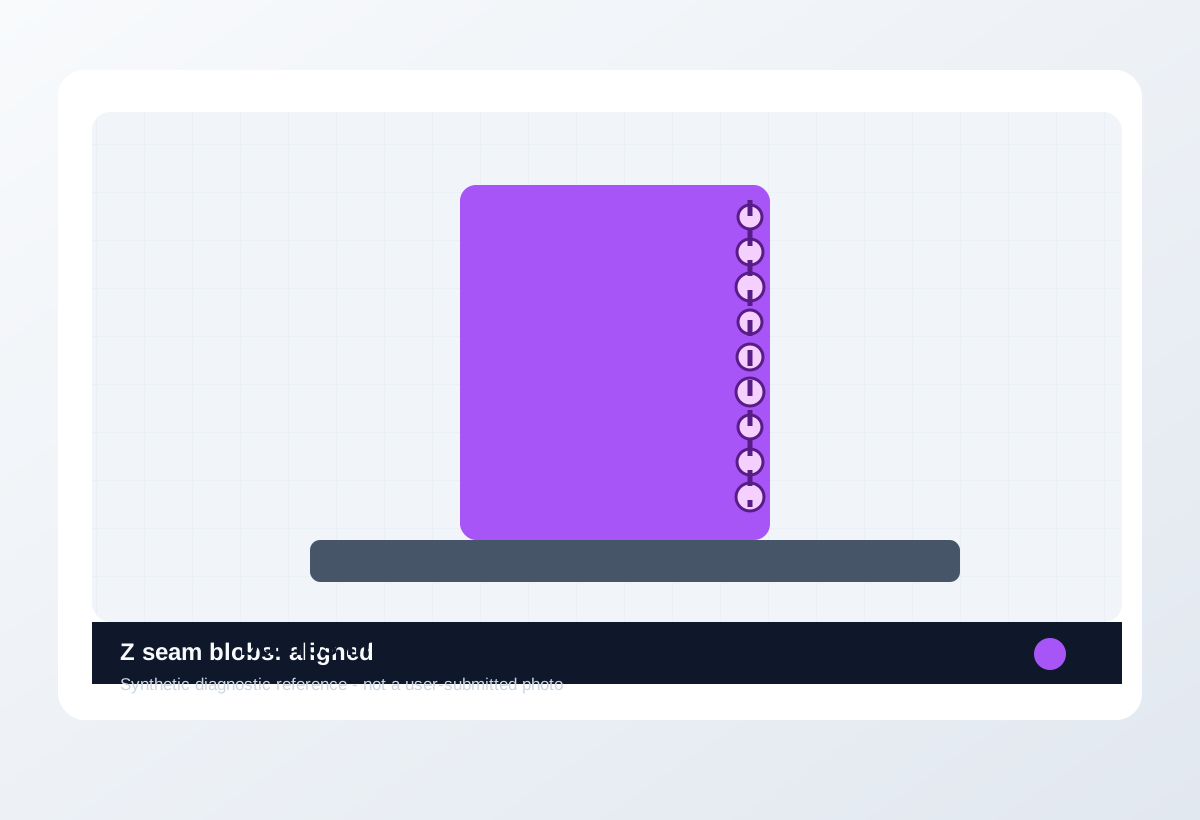
Visual diagnosis
Match the visible pattern before changing settings.
Original synthetic diagnostic reference plus licensed look-alike references; confirm with the test or log evidence below.
- Raised bumps line up on one vertical seam or at perimeter starts/stops.
- The defect moves when seam position moves.
- Corners may bulge if pressure advance is low.
- Random pimples away from the seam are moisture, temperature, nozzle buildup, or over-extrusion first.
- Fine hairs between towers are stringing.
- Missing material after travel means retraction/advance may be too aggressive.
- Random blob from wet filament
- PETG nozzle buildup
- Over-extrusion pimples
- Pressure advance corner bulge
- Retraction restart gap
- Does every blob align on one vertical line?
- Does the blob move with seam placement?
- Is the mark overfilled or a missing bite?
- Are random pimples present away from the seam?
- Best pressure advance value
- Whether wipe/coast should be enabled
- Whether the material is wet
- Whether the seam can be hidden by model orientation
Pattern comparison
Does the blob follow the seam, or appear randomly?
Use this before changing retraction. A seam-locked blob and a random blob usually need different fixes.
Bumps stack on one vertical start/stop line or move when seam position moves.
Tune seam placement, pressure advance/linear advance, wipe, coast, or restart behavior.Pimples show up away from the seam, on different walls, or near nozzle buildup/stringing.
Stop seam tuning and check moisture, temperature, nozzle buildup, or over-extrusion.Original visual references
Synthetic examples for fast pattern matching.
These are Print Fixes synthetic diagnostic references, not user-submitted photos. Use them to compare shape and location, then confirm with the test or log evidence on this page.

Licensed reference photos
Compare against real-world photos before changing settings.
These are externally licensed reference photos, not vendor images or scraped forum posts. Use them as pattern checks, then confirm with the small test model on this page.
.jpg?width=1280)
.jpg)


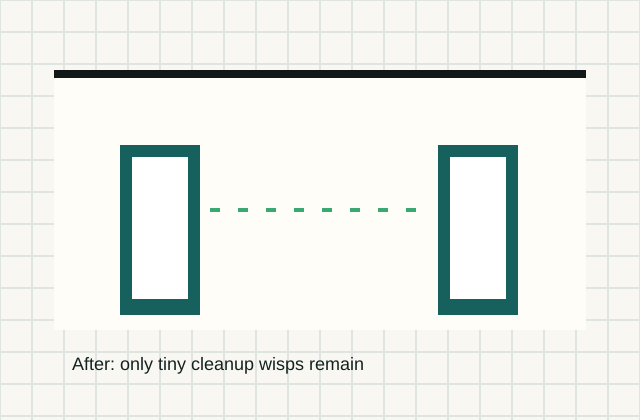
Before / after
Compare one small test, not a whole print.
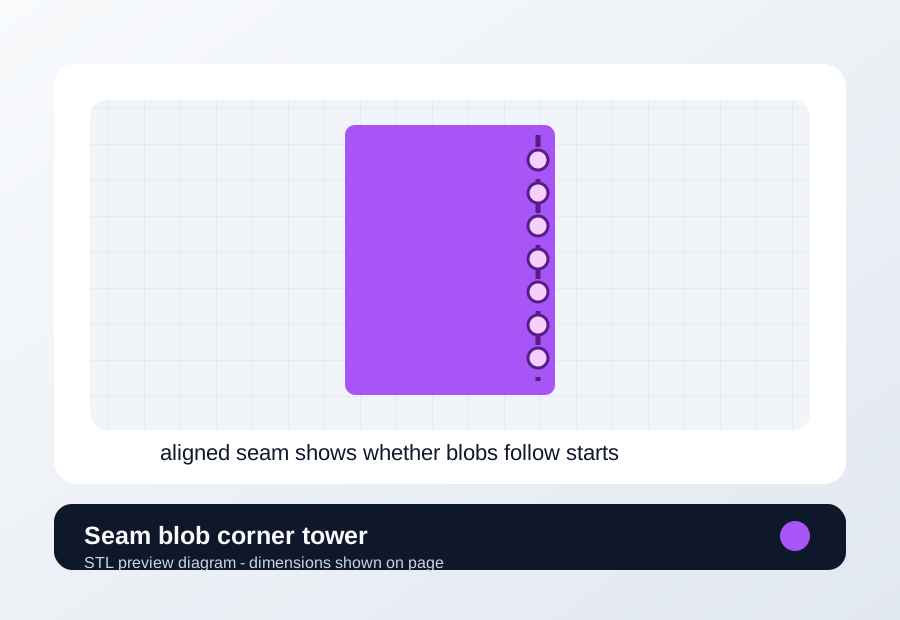
Use the seam tower to prove whether the blob follows the seam; this reference photo is a look-alike, not final evidence.
Download a quick test
Seam blob corner tower
Slice with aligned or rear seam to prove whether blobs follow the seam before tuning pressure advance, wipe, coast, or retraction.
- File
- STL
- Typical time
- 8-14 min
- Material
- Use the failed material; PLA only for baseline seam behavior.
- Dimensions
- 28 x 28 x 45 mm.
- Footprint
- 28 x 28 mm
- Height
- 45 mm
- Layer height
- 0.20 mm unless the page says first-layer only
- Infill
- 10-15%
- Walls
- 2
- Supports
- Off
- Speed
- Use current profile for baseline, then change only the proven variable
- Same seam location unless testing seam placement
- Same temperature
- Same retraction unless it is the chosen variable
- Same pressure advance unless testing advance
- Use aligned or rear seam for the first pass.
- Keep pressure advance, retraction, and temperature unchanged for the baseline.
- Change only seam placement or one pressure setting at a time.
Recommended Checks
0/5 doneVerification
- The seam tower shows a smaller, more consistent vertical mark on the same seam face.
- The blob moves when seam position moves; if it does not, switch diagnosis.
- Pressure advance or linear advance changes improve corners without creating gaps after travel.
- A normal part keeps the seam hidden or acceptable without random surface pimples.
Field guide
Follow the branch that matches your print
Blobs form a vertical line and move when seam position moves
- Likely cause
- This is a true seam/start-stop branch.
- First test
- Slice the seam blob corner tower with aligned or rear seam and photograph the same face.
- Change only this
- Keep seam aligned and tune pressure advance/linear advance or wipe/restart one at a time.
- Verify with
- Repeat the seam tower with the same material, seam location, temperature, speed, and nozzle.
- Stop when
- The mark is smaller, repeatable, and does not turn into a gap or random pimples.
Corners bulge and seam starts look overfilled
- Likely cause
- Pressure is not being reduced early enough.
- First test
- Slice the seam blob corner tower with aligned or rear seam and photograph the same face.
- Change only this
- Run pressure advance or linear advance calibration for this material/nozzle before retraction edits.
- Verify with
- Repeat the seam tower with the same material, seam location, temperature, speed, and nozzle.
- Stop when
- The mark is smaller, repeatable, and does not turn into a gap or random pimples.
The seam has a gap or tiny under-extruded bite after travel
- Likely cause
- Pressure advance, retraction, or restart is too aggressive.
- First test
- Slice the seam blob corner tower with aligned or rear seam and photograph the same face.
- Change only this
- Back off pressure advance or retraction/restart in small steps and reprint the tower.
- Verify with
- Repeat the seam tower with the same material, seam location, temperature, speed, and nozzle.
- Stop when
- The mark is smaller, repeatable, and does not turn into a gap or random pimples.
Pimples are scattered and do not follow seam position
- Likely cause
- This is probably not a z-seam problem.
- First test
- Slice the seam blob corner tower with aligned or rear seam and photograph the same face.
- Change only this
- Check wet filament, hot nozzle, dirty nozzle surface, or over-extrusion instead.
- Verify with
- Repeat the seam tower with the same material, seam location, temperature, speed, and nozzle.
- Stop when
- The mark is smaller, repeatable, and does not turn into a gap or random pimples.
The seam is acceptable but on the front face
- Likely cause
- The fix is placement, not more calibration.
- First test
- Slice the seam blob corner tower with aligned or rear seam and photograph the same face.
- Change only this
- Move seam to rear/corner, try aligned/scarf seam if available, or rotate the model.
- Verify with
- Repeat the seam tower with the same material, seam location, temperature, speed, and nozzle.
- Stop when
- The mark is smaller, repeatable, and does not turn into a gap or random pimples.
Concrete Parameter Range
| Setting | Start | Range | Change when | Stop when | Too far looks like |
|---|---|---|---|---|---|
| Seam position | Aligned or rear for diagnosis | Aligned/rear/corner for testing; avoid random until diagnosis is done | You need to prove whether blobs follow the seam | The blob location moves with the seam or the seam is hidden on the part | Overdoing this hides the seam but creates gaps or random scars. |
| Pressure advance / linear advance | Current material/nozzle value | Retune per material and nozzle; use the slicer or firmware calibration pattern | Corners bulge or seam starts are overfilled | Corners sharpen without gaps after travel | Too much creates gaps or weak starts after travel. |
| Retraction distance | Printer profile default | Direct drive often 0.4-1.2 mm; Bowden often 3-6 mm | Blob occurs after travel and pressure advance is not the main signal | Restart is clean without grinding, gaps, or clicking | Too much causes grinding, heat creep, or restart gaps. |
| Wipe / coast / restart extra | Off or profile default | Small steps only; slicer names and units vary | A small overfill remains at perimeter end/start after pressure is close | The seam shrinks without holes or underfilled starts | Overdoing this hides the seam but creates gaps or random scars. |
| Nozzle temperature | Known-good material range | Test 5 C lower only after seam behavior is proven | Ooze and random pimples appear with glossy strings | Blobs reduce without weak or matte layers | Overdoing this hides the seam but creates gaps or random scars. |
Material / Machine Differences
Wrong Turns
Stop tuning when
Do not keep chasing perfection after the signal is clear.
- The seam tower shows a small repeatable vertical mark, not a raised blob.
- Moving seam position moves the mark, proving the branch.
- Further pressure advance or retraction creates gaps after travel.
- Random blobs remain after seam improves; switch to material/nozzle diagnosis.
Common setups
Jump to the branch that matches your machine or material
Copy before changing more settings
Z-seam diagnostic brief
Fill this out after the first test so the next branch is based on evidence, not memory. The useful case is the one where only one variable changed.
Printer:
Slicer:
Firmware:
Material:
Nozzle size/material:
Bed surface:
Exact symptom:
Recent change:
First test run:
One change tested:
Result:
Next branch:Still not matching?
Jump to the next likely diagnosis
Problem Pattern
Use this page when bumps line up on a vertical seam, appear at perimeter starts, or move when seam position changes. If blobs appear randomly across the part, treat moisture, nozzle buildup, over-extrusion, or temperature as the next branch instead of tuning seam settings.
Likely Causes
- Pressure remains high when the nozzle starts or stops a perimeter.
- Pressure advance or linear advance is too low, too high, or not tuned for this material/nozzle.
- Wipe, coast, restart extra length, or retraction settings create a small overfill at the seam.
- Seam placement puts a normal start/stop mark on a visible face.
- Random blobs are being mistaken for seam blobs when wet filament, nozzle buildup, or high temperature is the real branch.
Print Context
- Applies to
- OrcaSlicer, Bambu Studio, PrusaSlicer, Klipper pressure advance, Marlin linear advance
- Best first move
- Force the seam to one visible rear corner and print the seam tower.
- Do not start with
- Random seam, more retraction, and pressure advance changes all at once.
After the test
Use the result, do not keep changing random settings.
If one check clearly changes the print, repeat that exact test once before moving on. If nothing changes, switch diagnosis instead of stacking more slicer edits.
Only after the evidence points here
Parts and supplies for the proven branch
Filament dryer or dry box
Print the same small stringing or surface test before and after a controlled dry cycle, without changing slicer values.
- Buy signal
- Popping, steam marks, rough surface, weak layers, or fine hairing improves on the same spool after drying.
- Skip if
- The spool prints clean after a simple temperature step or seam move.
- Save evidence
- Before/after photo, material, drying temperature/time, room humidity if known, and unchanged slicer settings.
Drying is a purchase only when moisture signs survive one controlled slicer change.
- Adjustable temperature
- Fan circulation
- Spool clearance for the material you use
- Print-while-drying path if TPU/PETG stays loaded
- Passive storage box for a spool that is already wet
- A dryer purchase when a 5 C temperature step fixed the stringing
Nozzle and cleaning kit
Run a hot extrusion or cold-pull check, then print a small flow wall with the same filament and temperature.
- Buy signal
- Extrusion curls, skips, or stays inconsistent after cleaning, or a brass nozzle has seen abrasive filament.
- Skip if
- The problem is only first-layer Z, bed mesh, or wet filament.
- Save evidence
- Free-air extrusion photo, cold-pull result, nozzle size/material, filament type, and whether flow changed after cleaning.
Replace the nozzle only after the extrusion path test makes the blockage or wear visible.
- Correct nozzle thread and length
- Brass for normal PLA/PETG
- Hardened steel or similar only for abrasive filaments
- Cleaning needles sized for the nozzle
- Hardened nozzles as a first-layer fix
- Random nozzle packs that do not match the hotend
Print Fixes may earn from qualifying purchases when commerce links are configured. Diagnostic steps stay independent: buy only when the failure evidence points to the part.
Warnings
- Too much pressure advance or linear advance can create corner gaps, weak starts, or under-extrusion after travel.
- Too much retraction can grind filament, cause heat-creep symptoms, or create restart gaps.
- Random seam placement can hide a diagnostic pattern and make the surface look dusty.
- Coast and wipe names vary by slicer; change one feature at a time and keep a profile backup.
- Blobs that line up on one vertical seam or move when seam position changes.
- Tuning pressure advance, linear advance, wipe, coast, restart, or seam placement with a small repeatable test.
- Random pimples across the model that do not follow the seam.
- Wet filament, nozzle buildup, or over-extrusion that affects every surface.
More traps to avoid
- Using random seam while trying to diagnose whether blobs follow the seam.
- Changing pressure advance, retraction, wipe, coast, and temperature in the same test.
- Copying another printer's pressure advance or linear advance value as a final answer.
Bench Note
Page: Z Seam Blob Fix
Printer / firmware:
Slicer profile:
Filament brand and material:
Nozzle size:
Bed surface:
Recent changes:
Result to compare next:
FAQ
How do I know it is really a z-seam blob?
Force the seam to one rear corner and print the seam tower. If the blob forms a vertical line and moves when the seam moves, tune seam and pressure behavior. If blobs stay random, switch to moisture, temperature, nozzle buildup, or flow.
Should I tune pressure advance or retraction first?
Tune pressure advance or linear advance when corners bulge and seam starts look overfilled. Tune retraction/restart/wipe when the blob happens after travel moves or at perimeter restarts.
When should I stop tuning the seam?
Stop when the seam is small, repeatable, and hidden on a less visible face, or when another setting starts causing gaps, weak starts, clicking, or rough surfaces.